Napa Valley has more $150 tasting flights than any one person needs in a lifetime. What a lot of first-time visitors don’t realize is that a handful of wineries here do something better than just pour wine — they teach you what’s actually in the glass. An educational wine tour in Napa Valley trades the usual sip-and-nod for something with more substance: you build your own blend, walk through century-old caves, or find out why two bottles made from grapes grown 200 yards apart can taste completely different. Below is a working list of the best educational wine tours in Napa Valley, sorted by what you’ll actually learn, so you can pick the kind of wine “school” that fits your trip instead of guessing at whichever winery has an opening.
Quick picks: the best educational wine tours by what you want to learn
If you’re short on time, here’s the fast version. Each of these hits a different kind of learning, so pick based on what you’re actually curious about. Want a broader starting point first? See our roundup of the best wine tours in Napa Valley — this list narrows in specifically on the educational side.
- Hands-on blending: Raymond Vineyards’ Winemaker for a Day, or Judd’s Hill’s small-group blending class
- History and legacy: Beringer’s cave and estate tours, or the newly reopened Robert Mondavi Winery in Oakville
- Farming and sustainability: Frog’s Leap’s organic-focused visit
- Food pairing: Robert Sinskey’s Root to Table, or Artesa’s chocolate and wine pairing
- Structured classroom learning: Napa Valley Wine Academy’s WSET courses
- Something different: Sterling Vineyards’ gondola ride or the Castello di Amorosa tour
Hands-on blending classes for aspiring winemakers
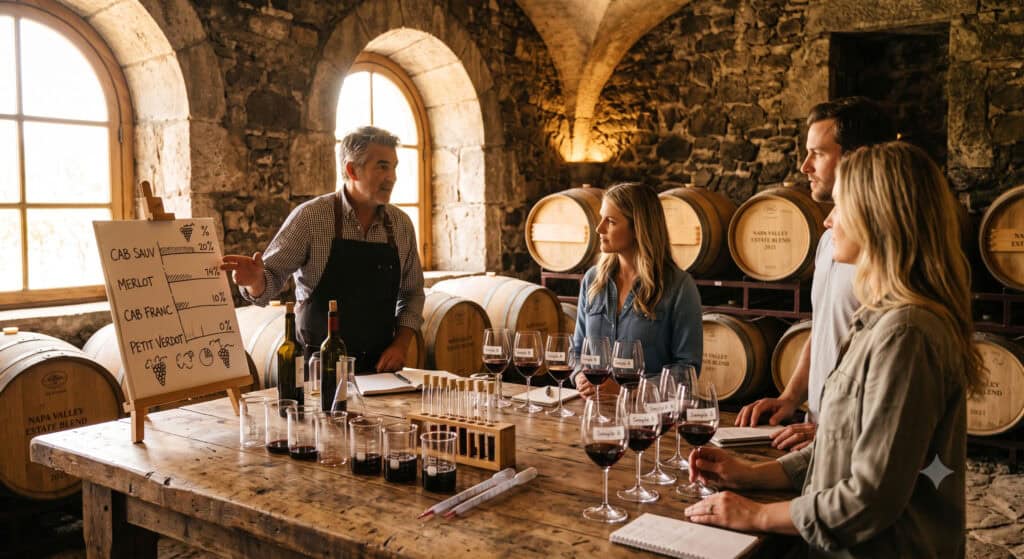
Raymond Vineyards runs the most complete version of this fantasy. Their Winemaker for a Day experience walks you through blending a Bordeaux-style red from individual lots, then you bottle, label, and take home your own creation. Pricing has run around $175 per person — worth confirming the current rate before you book. You’ll leave with a much better sense of why winemakers fuss over a 3 percent change in the Merlot ratio.
Judd’s Hill takes the same idea and shrinks the group size, which makes the class feel more like a real conversation with a winemaker than a scripted activity. If blending is the whole point of your trip, also check Rutherford Hill’s Blend Your Own Bordeaux — it’s been offered through booking partners in the past, but availability shifts by season, so confirm before building your day around it.
Sustainability and vineyard science tours
Frog’s Leap has built its entire identity around organic and regenerative farming, and a visit here is less about a polished tasting room and more about understanding how what happens in the dirt ends up in the glass. It’s a good stop if you’ve ever wondered whether “sustainable” on a wine label means anything beyond marketing.
If you don’t mind a short detour into Sonoma’s Russian River Valley, DeLoach Vineyards’ self-guided Theater of Nature walk covers biodynamic farming with actual gardens and biodiversity plots you can see up close. It pairs well with a Napa educational tour if you want to compare farming philosophies side by side.
Cave tours and Napa’s winemaking history
Beringer’s estate has been part of Napa’s tourism story since long before “wine country” became a marketing phrase, and its tours combine cave walkthroughs with the kind of history that explains why certain hillsides became famous in the first place.
Robert Mondavi Winery just reopened its Oakville estate in April 2026 after a three-year, $200 million-plus transformation. Cliff May’s original arch and tower are restored, the To Kalon Vineyard is now certified organic by CCOF, and the new cellar uses gravity-flow systems and optical sorting for small-lot winemaking. If your goal is understanding how Napa built its modern reputation, this is the most direct answer available right now. 2026 also marks the 50th anniversary of the Judgment of Paris, the blind tasting that put Napa on the map, so the history angle carries extra weight this year.
Food and wine pairing tours
Robert Sinskey’s Root to Table experience is built around the idea that pairing isn’t about a red-with-steak rule — it’s about balance between salt, acid, fat, and texture. The menu changes seasonally, so you’re tasting something closer to a working farm kitchen than a set tasting menu.
Artesa’s chocolate and wine pairing does something similar with dessert instead of savory food. Five wines against five chocolates sounds like a gimmick until you notice how tannin and sugar fight each other in some pairings and click in others. It’s a fast way to train your palate on structure.
Classroom-style wine education
If you’d rather leave with a real framework instead of scattered impressions, Napa Valley Wine Academy runs in-person and online WSET courses, Levels 1 through 3, that teach you how to taste, describe, and evaluate wine systematically. It’s the option for people who want vocabulary that holds up outside of Napa, not just inside one winery’s tasting room.
How to get the most out of an educational wine tour
Pace yourself. One blending lab, one pairing lunch, and one cave tour in a single day sounds ambitious until your palate gives out by 2 p.m. Spread the demanding stops across your trip instead of stacking them.
Book your winery reservations ahead of time. Most of these experiences run in small groups by design, which is exactly what makes them good for learning, but it also means they sell out. And ask your host something specific, like what’s the biggest call they make at harvest, or which winemaking decision surprises most visitors. You’ll get better answers than “what do you taste in this.”
Frequently asked questions
What’s the most unique educational wine tour in Napa Valley?
Sterling Vineyards’ aerial gondola is the one people remember. It’s the only winery gondola in the world, and the ride up is included with most tasting experiences. Castello di Amorosa is the other standout — a full recreation of a medieval Tuscan castle with themed rooms you actually walk through as part of the tour, not just a name on a label.
Are there dog-friendly educational wine tours in Napa Valley?
Yes, though most wineries keep dogs to outdoor areas and require a leash. Raymond Vineyards, St. Supéry, and V. Sattui are regular options. See our list of dog-friendly wineries in Napa Valley, and check Visit Napa Valley’s pet-friendly guide for current details if you’re planning around your dog.
How long does an educational wine tour usually take?
Most run 60 to 90 minutes, though blending classes and WSET sessions can run two hours or more. Build in extra time if you’re doing a regular tasting afterward — you’ll want it.
Do I need wine knowledge before booking an educational tour?
No. These tours are built for curious beginners as much as anyone else. If anything, skip the standard tasting room and go straight to an educational tour first — it makes every tasting after that one more useful. Need a refresher first? Here’s how to taste wine in Napa Valley like you know what you’re doing.
What’s the best time of year for an educational wine tour?
Harvest season, roughly late August through October, is the most interesting time to visit because you can see fermentation and crush happening in real time. Spring and early summer are quieter and easier to book, which matters if you’re set on a specific small-group class.
How much do educational wine tours in Napa Valley cost?
Expect anywhere from around $55 for a gondola-and-tasting combo to $175 or more for a full blending class with take-home wine. Prices shift by season and winery, so confirm current rates directly before booking.
Napa’s wineries keep raising the bar on what a tour is supposed to teach you, from organic-certified vineyards to a newly rebuilt estate carrying Robert Mondavi’s original vision forward. Pick one or two of these for your next trip, and you’ll leave understanding the valley instead of just its wine list.