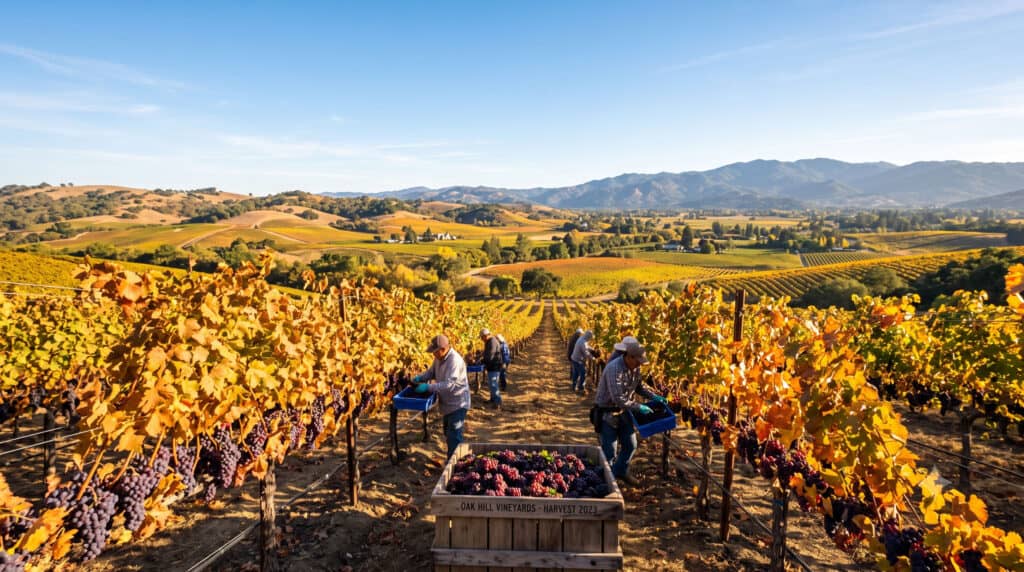
There’s a shift that happens in Napa Valley around late July that’s hard to put into words. The light gets a little golden, the nights cool faster, and the wineries that have been running a relaxed summer pace suddenly flip a switch. Vineyard crews are out before dawn. Crush pads start humming. The air smells faintly of fermentation by mid-September. If you’ve been thinking about timing a Napa trip around harvest season — also called crush season — this is your complete guide to what actually happens, when to show up, where to stomp grapes, and which events book up faster than you’d expect.
When Does Napa Valley Harvest Season Start?
Most people think of harvest season as a September thing. And while September is the heart of it, the actual start date is earlier than almost everyone expects. Sparkling wine and white wine grapes — Chardonnay, Pinot Gris, early-ripening Pinot Noir — typically get picked as early as the first week of August. Some years, Sparkling grapes start coming off the vine August 1. That’s when crush season officially kicks off in the valley.
The full harvest window runs from roughly early August through late October, sometimes stretching into early November for late-picked Cabernet and Petite Sirah. That’s three solid months of harvest activity. The sweet spot for visitors who want the full experience — visible crush activity, harvest events, warm days, and manageable (if still busy) crowds — is early to mid-October. September is the most intense, energy-wise. October has more of the marquee events. Either works. August is genuinely underrated if you want to watch grape picking without the full chaos of peak harvest tourism. For a deeper breakdown of which months suit which travel styles, our best time to visit Napa Valley guide breaks it all down.
The Harvest Calendar: What Happens in August, September, and October
Harvest isn’t one event — it’s a rolling process that unfolds over months. Here’s what you’re actually walking into depending on when you arrive.
August: The Opening Act
August in Napa is still summer — warm, dry, with crowds that are more focused on weekend wine tasting than harvest tourism. But behind the scenes, wineries are starting to pick. Sparkling wine grapes come in first, followed quickly by Sauvignon Blanc and early Chardonnay. If you happen to visit an estate winery in August and ask nicely, there’s a good chance you’ll get taken to a crush pad that’s just starting to hum. Temperatures hover in the upper 70s to low 80s, the valley is green and lush, and the tasting rooms are full but not overwhelming.
August is also the month when harvest hotels start filling for the fall. If your dates include late September or October, booking in August — not September — is the right call.
September: Peak Crush — the Valley at Full Speed
September is when harvest goes from background hum to full-volume. Crews are picking overnight — cooler temperatures preserve fruit quality better than afternoon heat — and you’ll occasionally hear trucks moving through the valley before sunrise. By mid-morning, crush pads at estate wineries are processing fruit that was on the vine four hours ago. The energy is genuinely electric. This is also when the first big harvest events land, including the V. Sattui Harvest Ball (September 19), grape stomp events, and harvest dinners at Michelin-starred restaurants.
The downside: September is also the most crowded month of the year. Tasting reservations fill up weeks in advance, and popular harvest events sell out entirely. If September is your window, book every single thing before you arrive. Walk-in plans do not survive harvest weekend.
October: Cabernet Season and the Final Events
October is when the reds take center stage. Merlot and Zinfandel typically come in through early to mid-October, with Cabernet Sauvignon — Napa’s signature grape — picked last, often in the final two weeks of the month. The vineyards are turning gold and amber by this point, and the valley looks like someone turned up the contrast on a photograph. Several wineries host their final harvest dinners before settling into off-season mode, with CHANDON’s Club Harvest Social among the last big gatherings before the valley quiets down for winter. Temperatures start to drop slightly but remain pleasant — mid-70s through early October, cooling into the 60s by late month.
Which Grapes Are Picked First? The Harvest Order Explained
This is one of the most searched harvest questions in Napa — and the answer is pretty satisfying once you understand the logic behind it.
Grapes are harvested in order of ripening, which is driven by each variety’s natural sugar and acid development. The general harvest sequence in Napa Valley runs like this: Chardonnay and sparkling base wines come in first, typically August into early September. These grapes are picked early on purpose — winemakers want lower sugar, higher acidity, and preserved freshness. Next come Sauvignon Blanc and other white varieties, followed by Pinot Noir, then Merlot and Zinfandel through September and early October. Cabernet Sauvignon and Petite Sirah are almost always last — picked late October, sometimes pushing into November in cooler years.
The reason Cabernet comes last is that it’s a thick-skinned, slow-ripening variety that needs the most hang time on the vine to develop the tannins and complexity Napa Cab is famous for. Rushing it means thin, under-ripe wine. Picking it at the right moment — after everything else is done — is one of the most critical calls a winemaker makes all year.
Grape Stomping in Napa Valley: Where to Get Your Feet Purple
Yes, you can actually stomp grapes in Napa Valley — and it’s exactly as fun and messy as it sounds. Modern wineries process fruit with mechanical equipment, but a handful keep the tradition alive for visitors during harvest season, usually by appointment or as part of a ticketed event. Dates aren’t set until harvest activity picks up in August or early September, so check back with these wineries as the season approaches.
Raymond Vineyards is probably the most theatrical of the bunch — they host stomping experiences in their Crystal Cellar, and the production value is high. PEJU Winery turns it into a full family-style lunch with stomping competitions and current-release tastings. Grgich Hills Estate celebrates their Croatian heritage with a stomp that has genuine cultural meaning behind it — the Grgich family has been doing this for decades. V. Sattui typically runs weekend stomping events during harvest with live music on the grounds. Reynolds Family Winery does an annual harvest celebration in late September that includes a grape-stomping competition alongside live music and library wine pours.
A few practical notes: wear clothes you don’t mind turning purple. Bring a change of shoes. Most events require advance booking and fill up quickly once dates are announced. None of these are casual drop-in experiences — plan accordingly.
If you want something more hands-on than stomping, Judd’s Hill Winery on the Silverado Trail runs their MicroCrush program year-round — you make your own small-lot wine with real equipment and go home with labeled bottles. It’s one of the most immersive winemaking experiences in the valley, harvest season or not.
The Best Harvest Events in Napa Valley
Harvest season in Napa has a way of filling your calendar if you let it. These are the events worth building your trip around — ranked loosely by how fast they sell out.
V. Sattui’s 40th Annual Harvest Ball — September 19
This is the single most anticipated event of the harvest season. It’s black-tie optional, it runs until nearly midnight, and the food is prepared by a Michelin Star chef inside a big-top tent on V. Sattui’s Tuscan-inspired grounds in St. Helena. For 2026, the event is doubly significant — it marks V. Sattui’s 40th Annual Harvest Ball and their 50th anniversary in Napa Valley, which means the production is going all-out. Tickets run $350–$395 per person (plus tax) depending on wine club membership status. This event has sold out every year it’s been held. If it’s on your radar, buy tickets now — you will not find them at the door. The surrounding weekend also includes a vineyard tour with the winemaker on Saturday morning and a brunch the following Sunday.
CHANDON Oyster Fest — September 20
This is CHANDON’s annual outdoor harvest bash in Yountville, and it’s exactly what it sounds like: Hog Island oysters and sparkling wine in CHANDON’s oak grove, with ribs from the grill and a festival-party energy that’s far more relaxed than the Harvest Ball. Tickets include a half-dozen oysters and three pours of premium sparkling wine, with premium experiences running around $95–$120 per person depending on membership tier. It’s a 21+ event. CHANDON’s Club Harvest Social follows on October 9, under the oaks, celebrating the 2026 vintage with Chef Peter’s seasonal pairings.
Cabernet Release Weekend — September 8–10
Each year, Napa Valley Vintners coordinates an early release window when member wineries pre-release their newest vintage of Napa Valley Cabernet Sauvignon. It’s primarily a wine club and collector event, but many wineries run public tastings and events tied to the weekend. If Cabernet is your thing, this is a genuine insider window into the new vintage.
Beyond those anchor events, dozens of individual wineries host harvest dinners, open-house parties, and behind-the-scenes cellar tours throughout September and October. The Napa Valley Vintners event calendar is the best single source for the full list.
What Sells Out First and When to Book
Here’s the honest planning reality of harvest season: if you’re reading this in summer and you haven’t started booking, some things are already gone.
V. Sattui Harvest Ball tickets sell out fast — often within days of going on sale. If you want them, check V. Sattui’s website and buy immediately. Waiting even a week can mean the waitlist. Grape stomping events at Raymond, PEJU, and Grgich Hills fill quickly once dates are released in August. Tasting appointments at popular wineries on harvest weekends (especially Saturdays in September) should be booked three to six weeks out minimum. Last-minute walk-ins at premium Napa estates in September are essentially a myth.
On the lodging side, harvest weekends in September and early October at Yountville and St. Helena properties can book out two to three months ahead. If you’re still looking at hotel options, our guide to how much it costs to visit Napa Valley covers the range of hotel pricing and where to find value. The short version: staying in the city of Napa rather than mid-valley saves meaningfully during harvest, and midweek rates are always lower than weekends. For a full look at transportation options during the busy season — including hot air balloon rides, wine trains, and getting around without a car — our transportation guide covers the logistics in detail.
One more booking note: harvest season is when sunrise balloon rides over the valley are at their most beautiful. Napa Valley Balloons and Napa Valley Aloft both run morning flights, and fall mornings over the vineyards — golden light, changing leaf colors, harvest activity visible below — are genuinely spectacular. Book those at least three to four weeks ahead for October weekends.
Is Harvest Season Worth the Crowds and Higher Prices?
Genuinely, yes — but only if you go in with realistic expectations. Harvest season is the most expensive and most crowded window of the year in Napa Valley. Hotel rates are at their peak, tasting fees are full-price with no room to negotiate, and you’ll be competing with everyone else who had the same idea. Our 3-day Napa Valley itinerary covers how to structure a harvest trip so you’re not just following the crowd from winery to winery.
That said, no other time of year offers what harvest does. The crush pads are operating. The vineyards are at their most dramatic. The events are unlike anything that runs in spring or summer. Travelers who book early, plan thoughtfully, and lean into the season rather than fighting it consistently say it’s the best Napa trip they’ve ever taken. If you want to experience the valley the way the people who love it most experience it, harvest is the season. Just don’t show up without a plan.
Frequently Asked Questions About Napa Valley Harvest Season
When does Napa Valley harvest season start and end?
Harvest season in Napa Valley typically runs from early August through late October. Sparkling wine and white wine grapes are usually the first to be picked, often as early as the first week of August. Cabernet Sauvignon — Napa’s signature red variety — is typically harvested last, in mid-to-late October and sometimes into early November in cooler vintages.
What is crush season in Napa Valley?
Crush season is another name for harvest season — the period when grapes are picked and crushed to begin the winemaking process. The name comes from the mechanical crushing of fruit that happens at winery crush pads immediately after picking. Crush season and harvest season refer to the same window: roughly August through October in Napa Valley.
Where can you stomp grapes in Napa Valley?
Several Napa Valley wineries offer grape stomping experiences during harvest season, including Raymond Vineyards (Crystal Cellar), PEJU Winery, Grgich Hills Estate, V. Sattui Winery, and Reynolds Family Winery. Specific dates are usually announced in August as harvest progresses, and most events require advance reservations. Check directly with each winery for 2026 dates and availability — spots fill quickly once announced. For a deeper look at wine tasting options beyond stomping, our tasting guide is a good place to start.
Which grapes are harvested first in Napa Valley?
Sparkling wine base grapes and Chardonnay are typically harvested first, often starting in early August. After that, Sauvignon Blanc and other whites come in, followed by Pinot Noir, then Merlot and Zinfandel. Cabernet Sauvignon and Petite Sirah are almost always the last to be picked, usually in mid-to-late October. The order follows each variety’s natural ripening timeline.
What sells out first during Napa Valley harvest season?
The V. Sattui Harvest Ball sells out fastest — often within days of tickets going on sale. Grape stomping events, harvest dinners at top restaurants, and tasting appointments at popular wineries on September weekends also book up well in advance. Hotel rooms in Yountville and St. Helena during harvest weekends can disappear two to three months ahead. The general rule: if you’re planning a harvest trip, book everything before you finalize your travel dates, not after.
How much more expensive is Napa Valley during harvest season?
Hotel rates are at their annual peak during September and October, with popular mid-valley properties in Yountville and St. Helena easily running $400–$700+ per night on harvest weekends. Staying in the city of Napa or going midweek can cut costs significantly. Tasting fees are standard year-round at most wineries, but the costs add up faster when you’re booking harvest dinners and events on top of regular tastings. For a full breakdown of what to budget, our Napa Valley cost guide is worth a read before you plan.
Napa Valley harvest season is one of those things you plan for all year, and then the moment you’re standing in a vineyard while crews are picking around you, it makes complete sense why people keep coming back. Book early, build in flexibility, and don’t miss the Harvest Ball if tickets are still available.