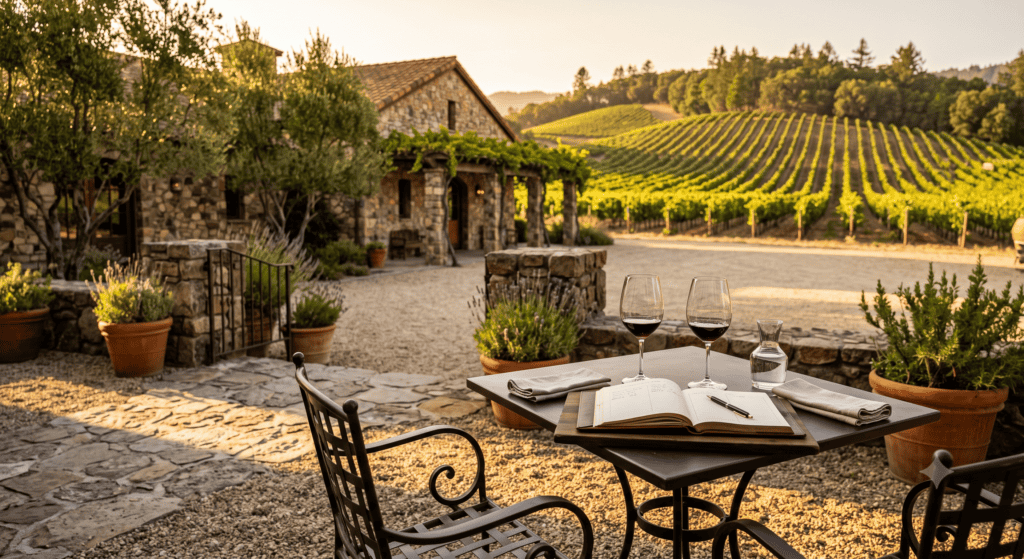
Pull off Highway 29, spot a tasting room sign, and wander in. That used to be how you visited Napa Valley. In 2026, it’s how you get turned away at the door. More than half of Napa’s roughly 550 wineries now require a reservation for most or all of their tasting experiences, and the ones that don’t often fill up anyway on a busy weekend.
The shift started as a pandemic-era crowd control measure and never really left. Wineries liked the calmer pace and predictable staffing. For visitors, it means Napa Valley winery reservations are now one of the trickiest parts of planning a wine country trip. Which wineries need a booking? How far out? What platform do you actually use? And what happens if your plans change at the last minute?
This guide covers all of it: booking windows by season, the platforms worth using, which wineries still let you show up unannounced, and how to cancel without losing your deposit.
Why Napa Valley Winery Reservations Became the Default
Of Napa’s roughly 550 member wineries, tracked by the Napa Valley Vintners trade association, a solid majority now require advance booking for at least some of their experiences. The shift accelerated between 2020 and 2022 and simply became how business gets done. Timed reservations meant fewer people crowded into one tasting room at 2 p.m. on a Saturday, and staff could plan their day instead of guessing.
There’s no single rule across the valley, though. Some wineries require a booking for every pour; others only require it for cave tours, private experiences, or weekend visits and stay relaxed on weekdays. A smaller group still takes walk-ins, though even those usually prefer a call first, and the line between “appointment required” and “just show up” shifts with the seasons.
The safest assumption: treat every winery as if it requires a reservation until you’ve confirmed otherwise. If you’re still mapping out the rest of your trip, our first-time visitor guide to Napa Valley covers the planning picture beyond just booking tasting rooms.
How Far in Advance to Book Napa Wine Tastings
How far out you need to book depends almost entirely on when you’re visiting, and guessing wrong is the most common mistake first-time planners make.
- Peak summer (June–September, especially weekends): Book 8–12 weeks ahead for premium estates. Weekday visits often still open 2–4 weeks out.
- Harvest (late August–October): Nearly as competitive as summer. Aim for 6–8 weeks out on weekends.
- Shoulder season (April, May, November): The sweet spot. Standard tastings usually book 2–3 weeks ahead; cave tours and other special experiences need 4–6 weeks.
- Off-season (January–March): The easiest window of the year, with same-week or same-day slots common. Fees can run lower too.
- Holiday weekends (Memorial Day, Labor Day, Thanksgiving): Treat these like peak summer no matter the month. Book 8–10 weeks out.
Booking earlier rarely hurts, since most wineries let you adjust or cancel if plans shift. For a closer look at how the seasons compare beyond booking windows, see our guide to the best time to visit Napa Valley.
Where to Book: CellarPass, Winery Websites, and Guided Tours
Three main avenues get you a reservation: CellarPass, a winery’s own website, and a guided tour.
CellarPass is the platform most of the valley actually runs on, even though it barely shows up in travel blog roundups. Hundreds of wineries list their time slots, pricing, and deposit terms there, which makes it the fastest way to compare availability before locking in an itinerary. It also updates in real time, so checking back the morning of your visit can turn up a slot someone just canceled.
Smaller, boutique estates often skip third-party platforms entirely. If you have a specific winery in mind, check its own site for a “reservations” or “visit us” page; booking direct sometimes unlocks member pricing that never makes it onto CellarPass.
If you’d rather hand off the planning altogether, a guided tour is worth it, especially for a first Napa trip or a group that doesn’t want to argue about the itinerary. Our rundown of the best Napa Valley wine tours breaks down which operators are worth booking.
A practical approach: scout CellarPass first, book directly with any winery that runs its own system, and use a guided tour if you want someone else handling the driving and the decisions.
Napa Wineries Where Walk-Ins Still Happen
A meaningful number of Napa wineries haven’t gone fully appointment-only, particularly smaller, family-run estates. A few well-known names still leave the door open too, at least some of the time, but don’t expect guarantees. Walk-in friendly can mean welcome on a Tuesday and sold out on a Saturday.
Napa Cellars in Oakville keeps things low-pressure and encourages guests to bring their own picnic; walk-ins are generally accommodated.
Beringer Vineyards in St. Helena offers a self-guided outdoor tasting that doesn’t require advance booking, alongside reservation-only cave tours and seated experiences. It’s one of the more accessible historic estates for a spontaneous stop, especially on weekdays.
Mumm Napa in Rutherford will seat walk-ins when a table is open, though staff are upfront that calling ahead is the safer bet, particularly on weekends.
V. Sattui in St. Helena has tightened up in the past couple of years. The winery’s own site now lists reservations as recommended, especially on weekends and holidays, rather than optional. The deli and picnic grounds stay walk-in accessible even when the tasting room is fully booked, so plan on the deli as your backup if a spontaneous stop matters more than a specific tasting.
Hagafen Cellars in Napa runs its seated tastings by appointment, with same-day bookings often available if you call ahead. It’s not a true walk-in winery anymore, but it’s close.
Even at the most walk-in-friendly wineries, calling ahead the morning of your visit takes about ninety seconds and can save you a wasted drive. If you’re building a lower-cost day around wineries like these, pair it with the ideas in our guide to budget-friendly things to do in Napa Valley.
What to Do When Your Winery Is Sold Out
Keep CellarPass open and check it again the night before and the morning of your visit. Cancellations happen constantly in the 24–48 hours before a reservation, and the platform updates as soon as a slot frees up.
If a winery shows nothing available, call or email and ask about a waitlist. Plenty of wineries keep an informal one that never makes it onto their website.
Check for a different experience at the same winery, too. A cave tour might be booked solid while a standard seated flight still has room, since wineries often manage each experience type on its own calendar.
Consider moving your day instead of your destination. Switching a Saturday tasting to a Friday or Monday at the same winery can open up meaningfully more availability. If you’re celebrating something, like an anniversary or a milestone weekend, a weekday booking at a sought-after estate is often the easier way to land the experience you actually wanted. Our guide to a romantic couples weekend in Napa Valley has more on timing that kind of trip well.
Canceling a Napa Winery Reservation Without Losing Your Deposit
Most wineries now collect a deposit or full prepayment at booking, typically the tasting fee itself, which runs anywhere from about $35 to $150 or more per person depending on the experience. Read the cancellation policy before you pay, especially if your travel plans are still shifting.
The common window is 48–72 hours before your reservation. Cancel inside that window and you’ll usually get a refund or a credit toward a future visit. Miss it, or no-show, and most wineries keep the full amount. A handful of premium experiences, especially cave tours, private dinners, and anything multi-hour, enforce a stricter 7-day window instead.
A few habits protect you: read the policy at booking, set a reminder 72 hours out, and ask about rescheduling instead of canceling outright — many wineries will move your date at no cost even after the window closes. If you have travel insurance, check whether it covers prepaid tastings.
CellarPass bookings get managed through your account there. Direct bookings usually mean a phone call or email to the tasting room, so hang onto your confirmation email with the booking reference. If a picnic is part of your plan, the same booking logic applies. Our guide to Napa Valley wineries where you can picnic covers which estates require advance picnic reservations.
Frequently Asked Questions
Do all Napa Valley wineries require reservations?
No, but the majority of popular and premium wineries do. A meaningful number of smaller, boutique estates still accept walk-ins, particularly on weekdays. Check before you go, since policies shift with the season and with staffing.
How far in advance should I book a Napa Valley wine tasting?
For standard tastings, aim for 2–4 weeks out. For cave tours or private tastings, plan 4–6 weeks ahead. Summer weekends at top-tier estates fill 8–12 weeks in advance, while January through March offers same-week availability.
What is CellarPass and how does it work for winery reservations?
CellarPass is the leading booking platform for Napa Valley wineries. You search by date, see real-time availability across multiple properties, and reserve your slot with a deposit, making it the fastest way to compare options in one place.
Can I get a refund if I cancel a Napa winery reservation?
Usually yes, if you cancel within the winery’s stated window, typically 48–72 hours before your visit. Cancel after that window and most wineries charge the full deposit. Premium and multi-hour experiences often carry stricter 7-day policies.
What should I do if a Napa winery is sold out for my dates?
Check CellarPass for same-day availability, since cancellations open up slots in the 24–48 hours before a reservation. You can also call to ask about an informal waitlist or switch from a weekend to a weekday visit.
Is it better to book directly with a winery or through a platform like CellarPass?
CellarPass is the best starting point for comparing availability across multiple wineries. Direct winery websites matter most for boutique estates that skip third-party platforms. A guided tour makes sense when you want someone else handling the logistics.
Final Thoughts
Booking a Napa Valley trip now takes more coordination than it used to, but it rewards the effort. Lock in summer and harvest dates early, keep CellarPass open as your first stop, and read the cancellation terms before your card gets charged. Do that, and the appointment-only system stops feeling like a hurdle and starts feeling like what it actually is: fewer crowds and more attention once you’re at the table.