You’ve got a long weekend, a love of good wine, and two of Northern California’s best wine regions within an hour of each other. The Napa vs. Sonoma debate is the first question almost every wine country visitor asks, and it turns out the answer matters more than people expect.
Pick the wrong region for your travel style and you can spend a small fortune on a vibe that doesn’t fit. Pick the right one and you’ll already be planning your next trip home. Napa Valley and Sonoma County sit side by side in Northern California, yet they deliver two distinctly different wine country experiences.
This guide breaks down wine styles, transportation, dining, cost, and overall feel, so you can choose with confidence and enjoy every sip.
Napa vs. Sonoma: The Core Difference in a Nutshell
Before getting into specifics, here’s the honest one-sentence version of each region.
Napa Valley is compact, polished, and Cabernet-forward. Expect curated tasting experiences, stunning vineyard estates, Michelin-starred dining, and a reservation-required culture that reflects just how popular the valley has become. The vibe is luxe and intentional, and mostly in a good way.
Sonoma County is bigger, more varied, and easier to explore at your own pace. It covers a wider stretch of Northern California, which means more wine varietals, more room to breathe, and generally a more relaxed, come-as-you-are energy. It also has the coast, redwood forests, and small towns that make for great side trips beyond the wineries.
- Choose Napa if: you want the iconic, bucket-list wine country experience with world-class Cabernet and elevated dining in a compact, easy-to-navigate valley
- Choose Sonoma if: you want more variety, more room to explore, a laid-back vibe, and the flexibility to mix wine with coastal drives and small-town wandering
- Choose both if: you have three or four days and want the greatest hits of Northern California wine country
Wine Styles: What You’ll Actually Be Tasting
This is where the two regions differ most, and where your personal wine preferences should do most of the deciding.
Napa Valley is Cabernet country. The valley’s warm days and cool nights are tailor-made for Bordeaux varieties, and Napa Cab has been world-famous since the 1976 Judgment of Paris, when blind tasters ranked California wines above top French producers. You’ll also find excellent Merlot, Bordeaux blends, and rich, full-bodied Chardonnay, especially in the cooler Carneros area at the valley’s southern end. AVAs like Oakville, Rutherford, and Stags Leap District are home to some of the most sought-after bottles in American wine.
Tasting fees in Napa reflect that prestige. Standard seated tastings now run $45 to $75 per person at most wineries, and reserve or food-paired experiences can climb to $100 to $150 or more. Walk-in bar flights are still out there in the $25 to $40 range if you know where to look; our guide to affordable Napa Valley tastings under $50 covers eight wineries that pour well without the splurge-level price tag.
Sonoma County is more of a playground. It spans 19 different AVAs, which means dramatically different climates and soil types, from the foggy, cool Russian River Valley (a Pinot Noir paradise) to the warmer, drier Dry Creek Valley (old-vine Zinfandel country). You’ll also find sparkling wine, Sauvignon Blanc, Grenache, Syrah, and just about anything else you’re curious about. If you like exploring different styles in a single trip, Sonoma rewards that curiosity in a way Napa simply can’t.
Getting Around Napa vs. Sonoma
Transportation logistics matter more than most people plan for, and the two regions handle it very differently.
Napa Valley is compact and mostly linear. The two main routes, Highway 29 and the Silverado Trail, run parallel up the valley, which makes it fairly easy to cluster your day around one area. The downside: everyone else knows this too, and weekend traffic can be brutal, especially during harvest season from August through October. Popular transportation options include private drivers and small-group wine tours, rideshare (best in Napa city, Yountville, and St. Helena), and the Napa Valley Wine Train, which runs a curated dining experience along the valley corridor.
Sonoma County is spacious and sprawling. The tradeoff for all that variety is drive time: bouncing between Russian River Valley, Sonoma Plaza, Dry Creek, and Alexander Valley in a single day can mean an hour or more behind the wheel. On the upside, you’ll hit less corridor congestion in many areas, and the scenery along the way is genuinely beautiful. Plan your route before you go, or you’ll end up crisscrossing the county without realizing it.
Bottom line: Napa is easier to navigate with minimal planning. Sonoma rewards a little more upfront thought about which sub-region you’re anchoring your day in.
Where to Stay: Accommodations and Typical Costs
In Napa Valley, lodging is polished and pricey. You’ll find stunning resorts, boutique inns, and high-end bed and breakfasts, particularly in Yountville, St. Helena, and downtown Napa. Staying close to the tasting action is convenient, but that convenience comes at a premium. Weekend rates at well-located properties can climb well above $400 to $500 a night during peak season, and spring and fall weekends are especially competitive.
Budget-conscious travelers do have options. Staying in the city of Napa rather than a mid-valley town can save meaningfully, and midweek visits typically drop rates across the board. Our roundup of budget-friendly things to do in Napa Valley pairs well with a lower-cost lodging strategy; you don’t have to spend big to have a genuinely great trip.
In Sonoma County, accommodation options are broader and often more affordable, especially outside the most famous sub-regions. You’ll find charming inns near Sonoma Plaza, vineyard-adjacent stays in Healdsburg, glamping options, and coastal accommodations in places like Bodega Bay. If you’re flexible about being right in the center of things, you can often find excellent value without sacrificing charm.
Food and Dining: Napa’s Glamour vs. Sonoma’s Soul
Both regions eat well. The question is what kind of meal you’re after.
Napa’s dining scene is legitimately world-class. Yountville alone punches far above its weight in Michelin recognition, anchored by The French Laundry, a three-Michelin-starred restaurant and one of America’s most celebrated reservations. La Toque, Bouchon, and Auberge du Soleil represent the elevated end of the spectrum, while Oxbow Public Market in downtown Napa is the easy, crowd-pleasing stop for groups with mixed tastes and budgets. Our guide to the best restaurants in Napa breaks down top spots across every price range.
Sonoma’s dining scene leans farm-to-table, coastal, and soulful. You’re more likely to find yourself eating clam chowder in Bodega Bay, grabbing fresh bread from a bakery on Sonoma Plaza, or sharing a wood-fired pizza surrounded by vineyard views. It’s less occasion dining and more everyday delicious, which, depending on your travel style, can feel like exactly the right pace.
If you’re planning a winery-centered day in either region, consider a picnic lunch to save on cost and slow things down. Our guide to wineries where you can picnic in Napa Valley has a full list of properties that welcome outside food.
Napa vs. Sonoma: Cost Comparison
Let’s be direct: both regions can be expensive. But there’s a real cost gap once you compare apples to apples.
Napa tends to run higher across nearly every category: tasting fees, lodging, and dining. That’s partly the prestige factor and partly the demand. Sonoma typically offers more flexibility. You can often find walk-in tastings at smaller producers, stay at value-priced inns outside the main towns, and eat well without a reservation.
For a full line-item look at what a Napa trip actually costs, our full Napa Valley budget breakdown walks through tastings, lodging, dining, and transportation for different trip styles.
- Go midweek: Monday through Thursday brings lower lodging rates and calmer roads at wineries in both regions
- Book one splurge tasting per day: anchor your day with one memorable experience, then balance it with a casual flight or picnic elsewhere
- Skip the tourist corridors for lodging: staying just outside the busiest zones can save $100 to $200 a night with minimal sacrifice
- Eat one destination meal: keep breakfast and lunch casual, then invest in one great dinner
Is Napa or Sonoma Better for First-Time Visitors?
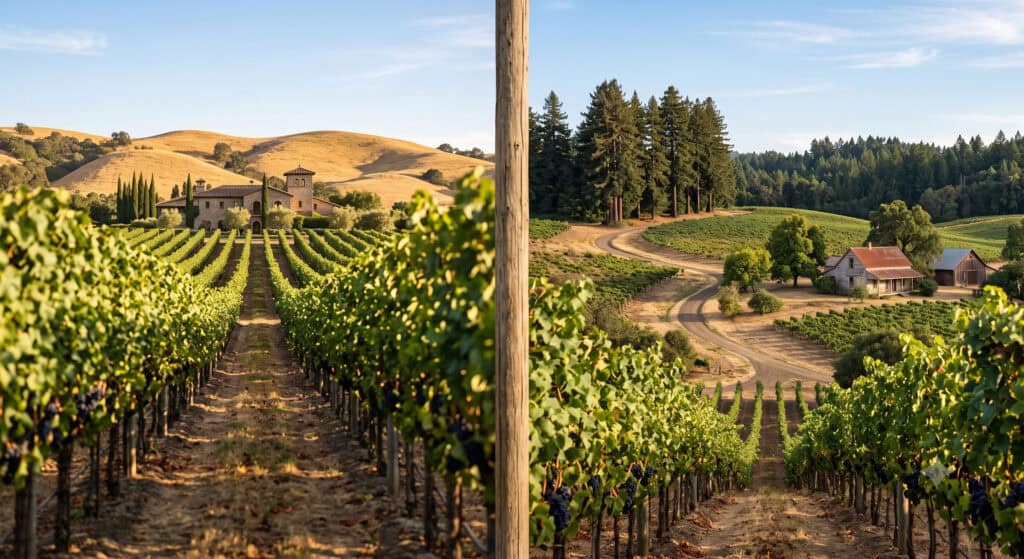
First-timers tend to love Napa for the wow factor. The valley is beautiful in a cinematic way: golden hills, vine rows stretching to the horizon, elegant tasting rooms, iconic names on the label. It delivers on the wine country fantasy most people arrive with, and the compact layout makes it easy to see a lot without a complicated plan.
That said, first-timers who prefer a lower-key, exploratory vibe often feel more at home in Sonoma. Less pressure, more variety, easier to stumble onto something great. If you hate the feeling of needing a reservation to enjoy yourself, Sonoma is more forgiving.
Visiting as a couple on a romantic trip? Napa. Visiting with a group of friends who want options and flexibility? Sonoma. Budget-conscious but still want a real wine country experience? Either can work; it just takes a little more planning in Napa.
Frequently Asked Questions
Is Napa or Sonoma more affordable?
Sonoma is generally more budget-friendly, especially for lodging and tasting fees. Napa has affordable options too: midweek visits, staying in the city of Napa, and choosing tastings under $50 can make the valley surprisingly accessible. The gap is real, but it’s not insurmountable with a little planning.
How far apart are Napa and Sonoma?
The cities of Napa and Sonoma are roughly 14 miles apart, about a 25-minute drive under normal traffic, though weekend wine-country traffic can stretch that past 40 minutes. The two wine regions share a border and overlap in areas like Carneros, so it’s easy to visit both in a single long weekend.
Which wine region has better Pinot Noir, Napa or Sonoma?
Sonoma, without question. The Russian River Valley AVA within Sonoma County is one of the premier Pinot Noir-producing regions in the world, thanks to cool temperatures and morning fog off the Pacific. Napa does produce some Pinot, particularly in Carneros, but Sonoma is the destination if Pinot is your priority.
Can you do both Napa and Sonoma in one trip?
Absolutely, and plenty of visitors do exactly that. A three to four day itinerary often looks like two days in Napa for Cabernet and elevated dining, and one to two days in Sonoma for Pinot, Zinfandel, a coastal drive, and Sonoma Plaza. The drive between them is easy, and the contrast makes each region more enjoyable.
Which wine country is better for a girls’ trip or bachelorette weekend?
Both work well, but they deliver different experiences. Napa feels more celebratory and occasion-worthy, great for groups who want the full luxury treatment. Sonoma offers more flexibility and variety, including coastal adventures and casual, walk-in-friendly wineries. Many groups actually split the trip between both; our Napa Valley bachelorette guide has ideas for building that kind of itinerary.
What’s the best time of year to visit Napa or Sonoma?
Spring (March through May) and fall (September through November) are the most popular, with ideal weather and harvest energy. Summer is warm and busy, so plan ahead for reservations and traffic in both regions. Winter is the quietest and most affordable season in both, with mustard blooming between the bare vines for one of the more overlooked scenic moments in wine country.
Final Thoughts
There’s no wrong answer in the Napa vs. Sonoma debate, just a better fit for your specific trip. If you want the iconic, polished wine country experience anchored in world-class Cabernet, Napa delivers. If you want more room to roam, a broader range of wines, and a slightly slower pace, Sonoma is pure joy, and there’s nothing stopping you from doing both.