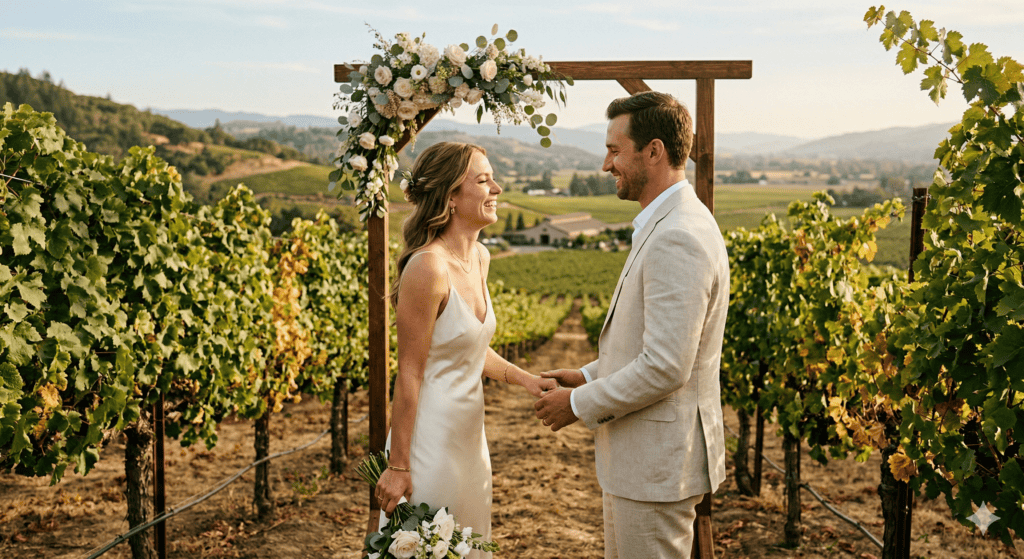
More couples are choosing to elope in Napa Valley than ever before—and it’s not hard to see why. You get the vineyard views, the world-class food, the golden California light, and none of the 120-person guest list drama. Just the two of you, a stunning backdrop, and a celebration that’s actually about your relationship.
But “just elope” is easier said than planned. Even an intimate Napa elopement has moving parts: location permits, officiant logistics, photography timing, and the question of whether you can actually get married where you’re picturing it. Getting those details wrong can turn a dream elopement into a stressful scramble.
This guide walks you through everything you need to plan a Napa Valley elopement in 2026—locations, costs, legal steps, and the details that make the difference between a beautiful memory and a chaotic morning.
Why Napa Valley Is One of the Best Places to Elope in the US
Most elopement destinations make you choose between scenery and logistics. Napa Valley gives you both. The scenery is world-class—vineyard rows stretching toward mountains, golden hour light that photographers travel here specifically to shoot, and a landscape that looks expensive without requiring a single decoration. The infrastructure is also genuinely elopement-friendly: excellent photographers who specialize in intimate sessions, officiants experienced with small ceremonies, and enough venue variety that you can find something that fits your exact vision and budget.
Napa also has a natural rhythm that suits elopements well. The valley is long and spread out, which means you can move between a morning ceremony location, a midday tasting, and an evening dinner without it feeling like a logistics relay race. And unlike some elopement hotspots, Napa doesn’t feel like a tourist trap—it feels like a real place that happens to be extraordinarily beautiful.
- Photography conditions: The light in Napa—especially in fall and late spring—is genuinely exceptional. Golden hour lasts longer here than almost anywhere in the country.
- Food and wine access: Your elopement day can include a Michelin-starred dinner, a private cave tasting, or a vineyard picnic. Few destinations match Napa for celebratory dining options.
- Scale flexibility: From a true two-person elopement to a micro-wedding of 10–20, Napa has venue and experience options that work at any intimate scale.
- Honeymoon built in: You don’t need a plane ticket after the ceremony. Napa is a full honeymoon destination on its own.
Where to Elope in Napa Valley: Best Locations by Vibe
Choosing your location is the first big decision—and it depends on what kind of ceremony you’re imagining. Here are the strongest options across different styles.
Vineyard & Estate Settings
A vineyard elopement is the classic Napa image: rows of vines, open sky, and that unmistakable wine-country atmosphere. The challenge is that most Napa wineries cannot legally host weddings or ceremonies due to Napa County’s Winery Definition Ordinance (WDO). A handful of permitted estates are your best options here.
Hans Fahden Vineyards (Calistoga) is a favorite for intimate ceremonies. The garden setting feels like a private European estate, and their cave space offers a genuinely one-of-a-kind backdrop for a small reception or dinner after the ceremony. It’s boutique, beautiful, and not on every couple’s radar—which is part of the appeal.
Brasswood Estate (St. Helena) works well for couples who want vineyard aesthetics with a more polished, design-forward setting. Their culinary program is a bonus if you want catered food on-site rather than heading out to a restaurant for dinner.
Cave Ceremonies
Napa has several barrel caves and cave-style spaces that create an intimate, candlelit atmosphere unlike anything else. If your elopement vision is moody and cinematic rather than bright and outdoor, a cave ceremony delivers that effortlessly. The Meritage Resort & Spa in Napa has a well-known cave event space that works for small ceremonies, and several winery properties offer cave access as part of their experience programming.
The Napa Valley Wine Train
The wine train is the most unique elopement venue in the valley—and it’s specifically designed for small groups. You get vintage railcars, moving views of the valley, built-in food and wine, and a ceremony setting that no one else will have. It’s particularly well-suited for couples who want the experience to feel like an event from start to finish, rather than a ceremony followed by scrambling to the next location. Book well in advance, especially on weekends.
Downtown Napa
If you want a walkable, lower-logistics elopement, downtown Napa is underrated. The riverfront area offers scenic ceremony spots, and you’re steps from excellent restaurants for a celebratory dinner afterward. A downtown ceremony also sidesteps most of the permit complexity that comes with vineyard and winery locations.
Resort Grounds
Solage Calistoga and Meadowood Napa Valley both offer intimate ceremony options within their resort grounds. The advantage here is obvious: ceremony, photos, dinner, and your first night as a married couple all happen in one place. No driving, no coordinating transportation, no rushing between locations.
Napa Valley Elopement Cost: What to Actually Budget
One of the biggest appeals of eloping is cost—and a Napa elopement genuinely can be done for a fraction of what a full wedding costs. That said, “affordable” is relative in wine country. Here’s a realistic breakdown of what to expect.
- Photography: $2,500–$6,000 for an experienced elopement photographer. This is the one place most planners say not to cut corners—your photos are all you’ll have. Napa has excellent photographers who specialize in intimate sessions and know the best light windows at each location.
- Officiant: $300–$800 for a licensed officiant who can conduct a personalized ceremony. Many also handle the marriage license paperwork.
- Location / venue fee: $0 (public parks, downtown) to $2,000–$5,000+ for a private estate or resort ceremony space. Some locations charge a site fee even for small groups.
- Hair & makeup: $300–$700 for a mobile stylist who comes to your hotel or accommodation.
- Florals: $200–$800 for a simple bouquet and boutonniere from a local florist, or zero if you prefer a minimalist look.
- Celebratory dinner: $200–$800+ per couple at a top Napa restaurant. This is one of the best ways to elevate an elopement day—a Michelin-starred dinner feels appropriately special.
- Lodging: $200–$800+ per night depending on property and season.
A well-planned Napa elopement can come together for $5,000–$12,000 total, depending on how many extras you add. That’s compared to the $75,000–$150,000+ range for a full Napa wedding with a larger guest list. For a detailed look at overall Napa travel costs your guests or family might ask about, our guide on how much it costs to visit Napa Valley is a helpful reference.
The Legal Steps: How to Get Married in Napa Valley
The legal side of a California elopement is genuinely straightforward—which is one of the reasons it’s such a popular destination for out-of-state and international couples.
No residency requirement: You do not need to be a California resident to get married in California. Couples from any state or country can obtain a California marriage license.
Getting your marriage license: You’ll need to visit the Napa County Clerk-Recorder’s office in person with valid government-issued ID. Both partners must be present. Licenses are time-limited (typically 90 days from issue), so time your appointment so the license is valid on your wedding date but not obtained so far in advance that it expires.
Witness requirements: California requires one witness to sign the marriage license. If you’re having a true two-person elopement with no guests, your officiant can often serve as the witness—confirm this when you book your officiant.
Fees: Marriage license fees are set by Napa County and can change. Check the Napa County website for current pricing and whether an appointment is required before you visit.
Confidential vs. public license: California offers both a standard marriage license (public record) and a confidential marriage license (not part of the public record). A confidential license requires that you’re already living together as spouses. Ask your officiant or county clerk which is appropriate for your situation.
Napa Valley Elopement Photography: Getting the Shots Right
Your photographer is the most important vendor you’ll book for an elopement. With no guests to share the day with, the photos become the record—and the story you tell later. Choosing someone who knows Napa specifically makes a significant difference.
A Napa-based elopement photographer knows which vineyard roads catch the best morning light, which cave spaces are accessible for portrait sessions, and how to work around the locations that require permits versus the ones that don’t. They also know how to plan your session around golden hour—roughly the 60–90 minutes before sunset—which in Napa produces the warm, cinematic light that makes Wine Country photos look the way they do.
- Book 6–9 months out for fall or summer dates. The best Napa photographers fill their calendars quickly.
- Ask specifically about elopement packages — many photographers offer intimate session pricing that’s more flexible than full-day wedding rates.
- Discuss permit requirements upfront. Some scenic locations require a photography permit. Your photographer should know which do and handle the paperwork.
- Plan your session around golden hour. For most of the year, that means ceremonies or portraits starting around 4–5 pm, with dinner reservations for 7–8 pm after.
Choosing Your Napa Elopement Season
Each season in Napa brings a different look, feel, and price point. Your photography, your ceremony vibe, and your budget are all affected by when you go.
- Spring (March–May): Vines are budding, wildflowers are out, and the green is impossibly lush. Temperatures are mild and ideal for outdoor ceremonies. More availability and competitive pricing compared to fall. A genuinely underrated elopement season.
- Summer (June–August): Golden and warm, with long evenings that extend your golden hour window. Book your ceremony for late afternoon to avoid the midday heat—especially in Calistoga and St. Helena, which run hotter than southern Napa.
- Fall / Harvest (September–October): The most visually dramatic season. Full golden vines, harvest activity everywhere, and that iconic Napa energy. It’s peak season for a reason—and peak pricing. Book as early as possible.
- Winter (November–February): Moody, quiet, and surprisingly romantic. Bare vines have their own stark beauty, and candlelit cave ceremonies feel especially atmospheric. Best availability and pricing of any season. Worth serious consideration if you want intimacy without competition.
For a deeper breakdown of what Napa feels like in each season—including harvest events and winter wine experiences—our guide on the best time to visit Napa Valley covers it in detail.
Planning Your Napa Elopement Day: A Sample Timeline
One of the underrated joys of eloping is how much time you have. No seating charts, no cocktail hour to manage, no speeches to coordinate. Here’s what a well-paced Napa elopement day might look like:
- Morning: Leisurely breakfast at your hotel or a favorite café. Hair and makeup artist arrives at your room. Relaxed getting-ready time—just the two of you.
- Early afternoon: Photographer arrives. Begin with portraits at your primary location while light is still bright and soft.
- Late afternoon (4–5 pm): Ceremony. Keep it short and personal—10 to 20 minutes is plenty for most elopement ceremonies. Then move into golden hour portraits immediately after.
- Evening: Celebratory dinner at a restaurant you’ve been dreaming about. Toast with a Napa Cabernet. No timeline, no obligation to anyone else.
- Night: Return to your hotel. Order a late-night cheese board. Watch the stars if your property has outdoor space.
If you’re extending your trip into a honeymoon—which we strongly recommend—Napa has more than enough to fill several days of slow, indulgent exploring. Our guide to things to do in Napa Valley is full of ideas from wine picnics to hiking trails to art experiences, at every budget level.
Getting to Napa for Your Elopement
Napa Valley is accessible from four major airports, all within 1–2 hours of the valley depending on traffic. San Francisco (SFO) is the most common arrival point and has the most flight options, but Oakland (OAK) often has less traffic and faster ground transport. Sacramento (SMF) is the easiest drive—straight shot on I-80 and Highway 29, roughly 90 minutes.
For your elopement day specifically, skip the rental car if you can. Having a private car service or driver frees both of you to enjoy the wine without worrying about who’s navigating. Many couples book a driver for the full elopement day—ceremony, portraits, dinner—which runs $300–$600 depending on hours. Our full breakdown of how to get to Napa Valley covers every arrival option in detail.
Frequently Asked Questions
Can you elope in Napa Valley without a big budget?
Yes—a Napa elopement is genuinely more affordable than most people expect. A well-planned two-person elopement covering photography, officiant, license, florals, and dinner can come together for $5,000–$8,000. The biggest variables are photography (don’t cut here) and your dinner and lodging choices. Off-peak seasons like winter and early spring offer the most budget flexibility.
Do you need a permit to elope in Napa Valley?
It depends on the location. Public parks and downtown areas may require a photography or event permit, especially for anything with equipment or a large setup. Private estate and resort venues charge a site fee in lieu of a permit. Your photographer and officiant will know which locations require permits and can help you navigate the process—ask specifically when you book.
What is the best location for a Napa Valley elopement?
It depends on your vibe. Hans Fahden Vineyards and Brasswood Estate are top picks for vineyard estate settings. The Napa Valley Wine Train is the most unique and memorable option for couples who want the experience to feel like an event. Resort grounds at Solage or Meadowood are ideal for couples who want everything in one place. Downtown Napa works beautifully for a low-logistics, walkable elopement day.
How far in advance should you book a Napa elopement?
For fall harvest season (September–October) or popular summer weekends, book your photographer and venue 6–9 months out. The best photographers fill their calendars quickly during peak season. For winter or early spring elopements, 3–6 months is usually sufficient—but earlier is always safer. Your marriage license appointment should be planned for within 90 days of your ceremony date.
Can you elope in Napa Valley if you’re not from California?
Absolutely. California has no residency requirement for marriage licenses. Couples from any state or country can legally marry here. You’ll need to visit the Napa County Clerk-Recorder’s office in person with valid ID—both partners must appear together. Plan this appointment for a day or two before your ceremony date.
Is the Napa Valley Wine Train good for an elopement?
It’s one of the most popular elopement options in the valley for couples who want something completely different. The train accommodates small groups well, the setting is romantic and memorable, and the food and wine are built into the experience. The main trade-off is less flexibility on timing and location since you’re on a moving train. It works best for couples who love the idea of a curated, all-in-one experience rather than a custom ceremony at a specific scenic spot.
Final Thoughts
Eloping in Napa Valley is one of those decisions that tends to look better the further you get from your wedding day. No seating charts to agonize over, no guest drama, no vendor juggling for 150 people—just a beautiful day, extraordinary scenery, and the two of you starting your marriage exactly the way you want. Napa makes it easy to do that with style.
Are you considering a Napa elopement or a micro-wedding? Drop your questions in the comments—or tell us which venue or season is calling to you. We’d love to help you figure out the details.