
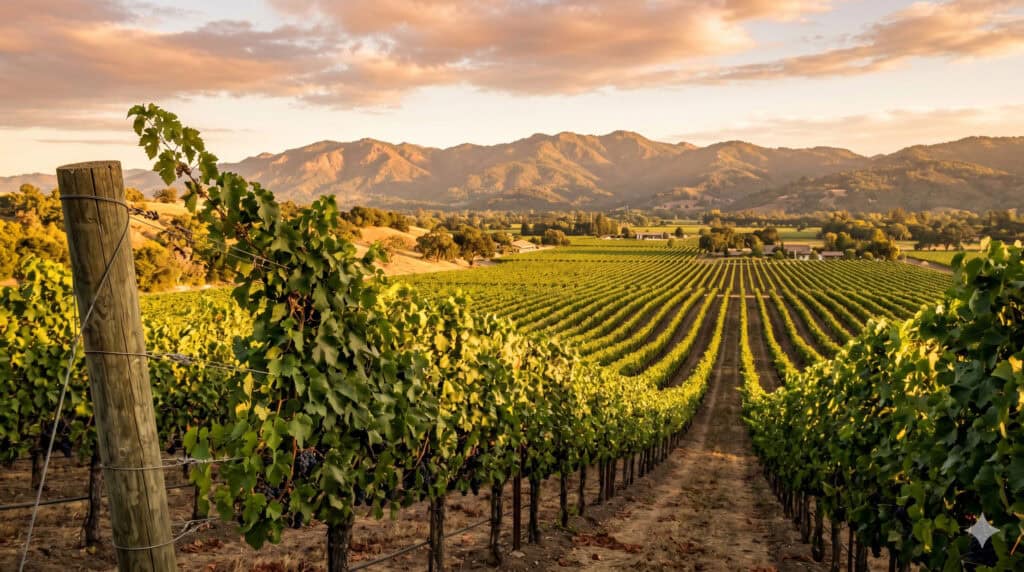
Ask ten visitors what they know about Napa before their first trip, and nine of them will say “Cabernet.” They’re not wrong — but they’re also only holding one piece of a much bigger picture. Napa Valley grows more than 60 grape varieties across 17 official sub-regions, each with its own microclimate, soil personality, and wine style. The region isn’t a monolith. It’s a collection of places that happen to be very, very good at this.
This guide covers every major wine Napa is known for — starting with the undisputed headliners, moving through the supporting cast, and ending with the “locals only” varieties worth ordering whenever you see them. By the time you finish reading, you’ll know exactly what to ask for in any tasting room.
Why Napa Wines Became Famous in the First Place
Napa’s reputation didn’t build quietly over decades — it detonated in a single afternoon. On May 24, 1976, a blind tasting organized in Paris by British wine merchant Steven Spurrier put California wines up against the best of Bordeaux and Burgundy. The judges were French. The wines were unlabeled. When the scores were tallied, a Napa Cabernet and a Napa Chardonnay had beaten the French bottles at the top of each category.
That event — now called the Judgment of Paris — didn’t just embarrass the French establishment. It changed the global conversation about what American wine could be. And it gave Napa a legitimacy that no marketing campaign could have manufactured. The winning Cabernet was Stag’s Leap Wine Cellars’ 1973 S.L.V.; the winning Chardonnay came from Chateau Montelena. Both wineries still operate today and both still welcome visitors.
Since then, Napa has continued earning its reputation one vintage at a time — not just in Cabernet and Chardonnay, but across a surprisingly wide range of styles.
The Two Grapes Napa Is Most Famous For
Cabernet Sauvignon
Cabernet Sauvignon is Napa’s signature grape by almost every measure. It covers roughly 54% of all planted vineyard acreage in the valley, making it the dominant variety in 16 of Napa’s 17 AVAs. It’s the wine that’s made the region famous, the wine most visitors specifically come to drink, and — when done well — one of the most distinctive expressions of the grape anywhere in the world.
What does Napa Cabernet taste like? Expect dark fruit as the foundation: blackberry, black currant, plum. Then layers of cedar, cocoa, tobacco, and baking spice, shaped by oak aging and winemaker intent. The tannins tend to be present but structured, especially in wines from hillside or mountain sites. Valley-floor Cabs from warmer areas like Rutherford and St. Helena can be richer and more immediately plush.
Where you taste it matters enormously. Oakville and Rutherford are famous for what growers call “benchland” Cabernet — a particular combination of gravelly loam soils and warm afternoons that produces wines with remarkable polish. Stags Leap District tends toward more fragrant, silkier expressions. The mountain AVAs — Howell Mountain, Diamond Mountain, Spring Mountain, Mt. Veeder, and Atlas Peak — push toward firmer tannins, concentrated dark fruit, and serious aging potential. If you want to understand why people pay $200+ for a single bottle, the mountain AVAs are a good starting point.
Cabernet is also the backbone of Napa’s Bordeaux-style blends, where it’s typically combined with Merlot, Cabernet Franc, Malbec, and/or Petit Verdot. These blends often go by proprietary names and represent some of the most celebrated bottles in American wine.
Chardonnay
Chardonnay covers roughly 13% of Napa’s planted acreage and produces everything from crisp, mineral-edged whites to rich, barrel-aged bottles with butter and toasted hazelnut. It has a reputation problem in some circles — oversaturation of cheap, flabby versions elsewhere convinced a lot of people to “not drink Chardonnay.” Napa’s best are the antidote to that.
The Chateau Montelena Chardonnay that won in 1976 was fermented in a way that emphasized the fruit rather than the oak — and that approach still defines Napa’s better white wines today. You’ll find the richest, most layered expressions in cooler sites: Los Carneros (where fog from San Pablo Bay moderates temperatures), Coombsville (east of the city of Napa, with cool mornings and a long growing season), and Oak Knoll District (one of the valley’s most versatile climates for white varieties). Mountain-grown Chardonnay from Mt. Veeder or Atlas Peak can deliver a vivid, mineral quality that’s a world apart from the grocery-store version of this grape.
Napa’s Other Major Wines (and Where They Shine)
Merlot
Merlot is Napa’s second-most-planted red variety, and it doesn’t get nearly enough credit. A well-made Napa Merlot offers plum, black cherry, and blackberry with a softer, rounder texture than most Cabs — it’s often more approachable young while still being age-worthy if you cellar it. If you want serious Napa flavor at prices that haven’t hit the Cabernet stratosphere, Merlot is the smart play.
Look for it in cooler-to-moderate AVAs like Carneros, Coombsville, and Oak Knoll, as well as Yountville, where the maritime influence brings more freshness and complexity. Mountain AVAs produce Merlot with firmer structure and deeper color — closer to what you might find in Pomerol or Saint-Émilion if that’s a reference point you find useful.
Pinot Noir
Pinot Noir is one of the most demanding grapes to grow — it needs cooler conditions, careful farming, and a light touch in the cellar. In Napa, that mostly means the southern end of the valley, where cold air flowing in from the San Pablo Bay and morning fog give the grapes a longer, gentler ripening season.
Los Carneros is the classic Napa zone for Pinot, and it produces wines with real elegance — strawberry and cherry fruit, rose petal aromatics, earthy undertones, and that characteristic silky texture. Coombsville and Wild Horse Valley also appear in conversations about quality Napa Pinot. If you’re comparing notes with Sonoma’s Russian River Valley or Santa Barbara’s Sta. Rita Hills, Napa Pinot tends to land a bit rounder and warmer in style — but still very much in the elegant-rather-than-heavy camp.
Sauvignon Blanc (and Fumé Blanc)
Napa Sauvignon Blanc is more versatile than most visitors expect. Depending on the producer and site, you’ll find styles ranging from zesty citrus and tropical fruit to melon, herbs, and a grassy edge — sometimes with barrel aging added for more weight and complexity. The latter style is where the term “Fumé Blanc” comes in: it’s a Napa-coined label (popularized by Robert Mondavi) for an oaked, fuller-bodied Sauvignon Blanc with a slightly smoky profile.
Both styles are worth exploring. Oak Knoll District is a reliable starting point for Sauvignon Blanc, thanks to its temperature moderation. You’ll also find good examples from cooler-climate producers throughout the valley. Sauvignon Blanc is among Napa’s top-five planted varieties — it’s not a specialty item, and prices are usually considerably more accessible than Cabernet.
Zinfandel
Napa Zinfandel bears almost no resemblance to the sweet pink wine that carries the same name. These are dry, full-bodied reds with blackberry, blueberry, black pepper, and warm spice — jammy in the best sense, with a finish that lingers. They tend to be high in alcohol (often 14–15%) and built for grilled food, bold flavors, and people who want their wine to make a statement.
The warmest parts of the valley are where Zinfandel thrives: Calistoga and St. Helena for richness and depth, and Howell Mountain and Spring Mountain if you want more grip and peppery structure alongside the fruit. Old-vine Zinfandel from any of these areas is worth seeking out specifically — older vines produce smaller yields and more concentrated flavors.
Sparkling Wine
Napa’s southern AVAs — particularly Los Carneros — produce sparkling wines that rival California’s best. The cool climate preserves the natural acidity that good sparkling wine needs, and several established producers (including Domaine Carneros and Mumm Napa) have built their entire identity around bubbles. If you’re interested in exploring this category further, our guide to the best sparkling wine tastings in Napa Valley covers the top picks in detail.
The AVA System: Why Where Matters as Much as What
Napa Valley became an official American Viticultural Area (AVA) in 1981. Today it contains 17 nested sub-AVAs — each defined by measurable differences in climate, soil composition, and elevation. The most recent addition is Crystal Springs of Napa Valley, officially recognized in 2024.
The practical upshot: a Cabernet from Oakville and a Cabernet from Howell Mountain can taste as different as wines from two separate countries, even when they’re grown just a few miles apart. Knowing the AVA gives you a shortcut to style-shopping:
- Want bold, opulent Cabernet? — Oakville, Rutherford, St. Helena, Calistoga
- Want structured, mountain-intensity Cab? — Howell Mountain, Diamond Mountain, Spring Mountain, Mt. Veeder, Atlas Peak
- Want elegant, cool-climate whites or Pinot? — Los Carneros, Coombsville, Oak Knoll District
- Want silky, fragrant Cabernet? — Stags Leap District
- Want sparkling wine? — Los Carneros, and the southern end of the valley generally
When you’re in a tasting room, ask the staff which AVA the wine comes from and why it matters for that particular variety. Most wine educators in Napa love this question and will happily talk for 20 minutes. Let them — it’s some of the best free wine education you’ll get anywhere.
Varieties Worth Ordering When You Spot Them
Beyond the headline grapes, Napa grows a long list of varieties that don’t make the marketing brochures but reward anyone curious enough to try them. When you’re tasting, keep an eye out for:
- Cabernet Franc — floral and savory, with graphite, violet, and fresh herb notes. Often blended into Bordeaux-style wines but increasingly bottled on its own.
- Petite Sirah — inky, tannic, deeply colored, built to age. Not Syrah, despite the similar name.
- Syrah — peppery and smoke-inflected with dark fruit. Excellent in Napa’s mountain AVAs.
- Malbec — plush and juicy, usually blended but occasionally bottled solo.
- Petit Verdot — rich, structural, used primarily as a blending grape but fascinating when poured alone.
The wine you didn’t plan to try is often the one you’ll remember longest. If a tasting room pours something off the standard list, say yes.
Planning Your Tasting Around Napa’s Wine Styles
Once you know what you’re looking for, building an itinerary around wine styles becomes much easier. If Cabernet is the main event, you’re probably heading north toward Oakville, Rutherford, or the mountain AVAs. If you want variety across a single day — some whites, some lighter reds, maybe bubbles — staying in the southern end of the valley (Carneros, Coombsville, Oak Knoll) gives you more range without as much driving.
Budget also plays a role. Tasting fees in Napa have risen significantly — many premium experiences run $75–$150+ per person. Our guide to the best affordable wine tastings in Napa Valley covers eight wineries where the experience is excellent and the prices are still reasonable. For getting the most out of a structured day across multiple stops, the best Napa Valley wine tours are worth considering — a good guide takes care of routing, pacing, and transportation while you focus on the wine.
If you’re comparing Napa to Sonoma and not sure which wine region fits your style better, our full Napa vs. Sonoma breakdown covers the key differences in wine styles, cost, logistics, and vibe.
Frequently Asked Questions About Napa Valley Wine
What is Napa Valley most famous for?
Napa is most famous for Cabernet Sauvignon, which covers more than half of the valley’s planted vineyard acreage. Chardonnay is the second-most recognized wine from the region. Both gained international acclaim through the 1976 Judgment of Paris, a blind tasting where Napa wines outscored top French bottles.
How many AVAs does Napa Valley have?
Napa Valley has 17 official American Viticultural Areas (AVAs) as of 2024, following the recognition of Crystal Springs of Napa Valley. Some older resources still cite 16 — the Crystal Springs designation is the most recent addition to the list.
What’s the difference between valley-floor Cabernet and mountain Cabernet?
Valley-floor Cabernets from AVAs like Oakville and Rutherford tend to be more immediately plush — rich fruit, polished tannins, and a style that drinks well younger. Mountain Cabernets from Howell Mountain, Diamond Mountain, and Spring Mountain typically show firmer tannins, darker fruit, and more structural intensity — wines that often benefit from several years of cellaring before they fully open up.
Is Napa wine only for serious wine drinkers?
No. Napa has wines across every style and experience level — from easy-drinking Sauvignon Blanc and approachable Merlot to structured mountain Cabernets that reward years of aging. Tasting room staff are almost always happy to guide you toward wines that match your palate, whether you’re a first-timer or an advanced collector.
What food pairs well with Napa Cabernet Sauvignon?
Napa Cabernet is built for red meat — the tannin structure in the wine softens against the fat and protein in beef, lamb, or bison. Aged hard cheeses (Manchego, Parmigiano, sharp cheddar) work well too. Richly sauced pasta or mushroom dishes are good options if you’re skipping meat. Avoid delicate fish or light salads, which can make the wine taste harsh by contrast.
When is the best time to visit Napa for wine tasting?
Harvest season — typically late August through October — brings the most vineyard activity and that “crush” energy, but also peak crowds and pricing. Spring (March through May) offers beautiful mustard blooms in the vineyards, mild weather, and fewer visitors. Shoulder seasons (November through February, excluding holidays) tend to have the best lodging deals and the most relaxed tasting room atmospheres.
Business Verification
This post references two historic wineries connected to the 1976 Judgment of Paris. Both are currently operating:
- Stag’s Leap Wine Cellars — active tasting experiences and reservations listed at stagsleapwinecellars.com.
- Chateau Montelena — current visitor options listed at montelena.com.