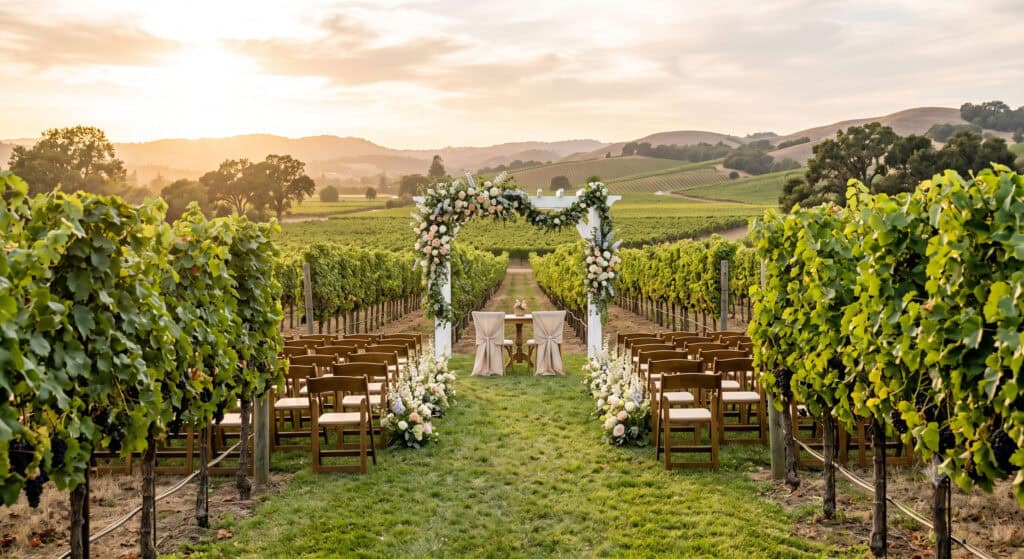
Every couple who calls me three months into Napa wedding planning asks some version of the same panicked question: wait, we can’t get married AT a winery? It’s the most common surprise in Napa Valley wedding planning, and it’s why so many couples scrap their venue shortlist and start over. Napa is one of the most beautiful, and most misunderstood, wedding destinations in the country. What works in a downtown ballroom or a backyard tent doesn’t always translate to wine country. This guide covers the real rules on winery weddings, the venues that actually deliver, honest 2026 cost numbers, and a checklist that keeps you moving.
The 4 Decisions That Make Napa Valley Wedding Planning Easier
Nail down four things before you fall for a venue. It’ll save you weeks of back-and-forth.
Guest count comes first. Your headcount drives venue options, shuttle requirements, catering minimums, even your music curfew. Make two lists, must-haves and if-it-fits, and stay flexible. Picturing something closer to two to twenty people? Our Napa Valley elopement guide covers that end of the spectrum, with venues and costs that look nothing like what’s below.
Wedding vibe is next. Napa pulls off vineyard-chic, black-tie resort, rustic ranch weekend, downtown modern, or something off-script entirely (a Wine Train wedding, for instance). Pick three to five words, romantic, candlelit, relaxed, and use them to filter venues and vendors instead of scrolling endlessly.
Budget range doesn’t need an exact number yet, but it needs to be real. Napa runs premium, and pricing swings hard by season, guest count, day of the week, and venue type.
Season affects more than photos. Each one in Napa has its own personality, price tag, and availability window, so lock it in early.
Can You Actually Get Married at a Napa Winery?
This is the most-Googled question about Napa weddings, and the answer surprises almost everyone: winery weddings are far more restricted than Instagram makes them look.
Napa County’s Winery Definition Ordinance, passed in 1989 to protect agricultural land, limits what wineries can legally host. Only five hold the grandfathered approvals for on-site weddings: Charles Krug, Beringer Vineyards, V. Sattui, Merryvale Vineyards, and Brasswood Estate, all clustered around St. Helena. The other 400-plus wineries in the valley cannot legally operate as wedding venues, no matter how good their grounds look in photos. You can read the ordinance itself on the Napa County code library for the exact legal language.
The upside: Napa still has alternatives that deliver the same wine country feeling without the permit headache. Resorts, private estates, golf-club vineyard settings, and dedicated event venues typically come with more flexibility on guest count, timing, and catering.
If a true winery wedding is non-negotiable, start with the five above and book early. If you want more room to maneuver, the venues below usually give you it.
Best Napa Valley Wedding Venues by Style
Venue options in Napa break into five real categories.
Legacy Winery Venues
These are the grandfathered wineries above, the classic vineyard-backed image most people picture when they think “Napa wedding.” Charles Krug is the valley’s oldest winery and scales from intimate to grand, with a ceremony lawn that feels like a private estate. Beringer’s manicured gardens and old-world architecture are about as iconic a Napa backdrop as exists. V. Sattui leans rustic and candlelit; Merryvale’s barrel room delivers a moody, historic reception space. Brasswood Estate is the most modern of the five, with a strong on-site culinary program.
Boutique Estate Venues
Hans Fahden Vineyards in Calistoga is the valley’s best-kept secret for something smaller and more transporting. The garden setting feels like a private European estate, and the cave space makes for a reception unlike anything a hotel ballroom delivers. Not on most couples’ radar yet, which is exactly the point.
Resort-Style Venues
Resorts are the easiest call for destination weddings, since lodging, catering, spa, and event coordination usually live under one roof and guests never have to shuttle between hotel and venue. Solage Calistoga brings modern luxury and mountain views, great for a full wedding weekend: welcome drinks, rehearsal dinner, a spa morning, farewell brunch. The Meritage Resort & Spa has multiple indoor and outdoor spaces plus a genuinely unique cave event room, with capacity that covers mid-size to large weddings well. Meadowood Napa Valley is the pick for ultra-romantic and tucked-away, though its offerings have shifted in recent years, so confirm current wedding availability directly before you fall for it.
Golf Club & Vineyard-View Venues
Chardonnay Golf Club, southeast of the city of Napa, gets you sweeping vineyard views and open-sky sunsets without touching a winery permit. Its Grand Pavilion handles up to 400 guests, with smaller rooms for 25 to 50; recent pricing has started around $15,000 for 50 guests. Fairview Napa’s reception pavilion, a 3,000-square-foot space with floor-to-ceiling windows over the golf course, tops out around 200 guests.
The Napa Valley Wine Train
If you want a wedding people talk about for years, book the train. Vintage 1915-1917 Pullman railcars, vineyard views scrolling past the windows, and food and wine service built in make it unlike a standard reception. It’s especially good for elopements or micro-weddings, where you’d rather maximize experience per guest than headcount. Packages for smaller groups have started around $8,000; our Napa Valley Wine Train guide breaks down current packages.
What a Napa Valley Wedding Actually Costs
Napa weddings run well above the national average because venue fees, staffing minimums, and catering requirements stack up fast as your guest count climbs.
The Knot’s 2026 Real Weddings Study, which surveyed over 10,000 U.S. couples married in 2025, puts the national average wedding cost at $34,200. Treat that as a floor, not a ceiling, for Napa. A fully catered wedding here with 100 guests at a resort or legacy winery venue can easily land between $75,000 and $150,000-plus.
There’s real room to bring that number down. Book a Friday or Sunday, since site fees typically run lower than Saturday rates. Go smaller and spend more per guest, a well-planned 40 to 60 person wedding often feels more special than a 120-person wedding on a stretched budget. Consider winter or early spring, when availability opens up and pricing softens. And separate your ceremony and reception when it makes sense, since a simpler ceremony location can trim overall venue costs.
Your out-of-town guests will be asking what their own trip costs too. Our full breakdown of what it costs to visit Napa Valley is worth sending their way.
Choosing Your Wedding Season
Each Napa season has a different personality, price point, and set of trade-offs.
Spring, March through May, is fresh, green, and underrated, with mild temperatures and competitive pricing. Summer, June through August, means long golden days and classic sunshine, though it can run hot inland, so plan shade and a later ceremony start. Fall harvest, September and October, is the postcard version of Napa, full vines and unreal evening light, but also peak demand and pricing, so book 12 to 18 months out. Winter, November through February, is cozy and candlelit, with the most availability, the softest pricing, and an intimacy that suits smaller weddings well.
Our full guide to the best time to visit Napa Valley digs into how each season plays out for guests beyond the wedding day too.
The Logistics Couples Always Forget to Ask About
Napa venues come with specific policies that shape your whole timeline. Ask these before you sign anything.
What time does amplified music have to stop? Many outdoor venues cut off at 9 or 10 pm. What time does the event have to fully wrap, separate from the music cutoff? Is a guest shuttle required? Plenty of venues mandate one; budget roughly $800 to $2,500-plus depending on guest count, and confirm the exact number with your venue. Are there outdoor decibel limits affecting live bands? What’s included versus what you’re renting, tables, chairs, linens, lighting? Many Napa venues are closer to bare bones than you’d expect.
Transportation isn’t optional here. Guests shouldn’t drive themselves home after a wine country reception, and rideshare coverage is thin in the valley’s rural stretches. Shuttles are the standard fix, and plenty of venues require them outright. Our guides to getting to Napa Valley and getting around Napa Valley cover the routes your out-of-town guests will need.
Do You Need a Napa Wedding Planner? Plus Your Planning Checklist
If you’re planning anything past a small elopement, hire a planner. Not because you can’t manage the details, but because local knowledge is worth more here than almost anywhere else. A good Napa planner handles the WDO restrictions for you, knows which vendors have already worked your venue, builds a transportation plan across a spread-out valley, and steers you away from Pinterest ideas that fall apart in actual outdoor wind. Budget for a month-of coordinator even if you handle everything else, since most Napa venues require professional day-of coordination anyway.
- 12–15 months out: Lock your season and guest count, hire a planner, book your venue, and confirm music curfew, shuttle requirements, and included rentals in writing.
- 9–12 months out: Book your photographer, secure catering, finalize your guest lodging block, and start your design direction.
- 6–9 months out: Book entertainment, florist, and rental vendors, and finalize transportation including shuttle routes.
- 3–6 months out: Finalize your menu and timeline, schedule your marriage license appointment, and start your seating strategy.
- Final month: Confirm every vendor’s arrival window, build a weather backup plan, hand logistics to your coordinator, and enjoy the week you’ve spent over a year planning.
Frequently Asked Questions About Napa Valley Wedding Planning
How much does a Napa Valley wedding cost?
Napa weddings run well above the $34,200 U.S. average from The Knot’s 2026 Real Weddings Study. Smaller, off-peak weddings at non-resort venues can land under $50,000, while mid-size weddings at resort or estate venues with full catering typically run $75,000 to $150,000-plus. Guest count and season are the two biggest levers, so get quotes from two or three venues with your actual headcount first.
Can you get married at a winery in Napa Valley?
Yes, but only at the five wineries holding grandfathered permits under the Winery Definition Ordinance: Charles Krug, Beringer, V. Sattui, Merryvale, and Brasswood Estate. The rest of Napa’s 400-plus wineries can’t legally host weddings. If a winery wedding matters to you, start with this list and book early.
What is the best season for a Napa Valley wedding?
Fall harvest is the most popular and photogenic, but also the most expensive and hardest to book. Spring is the underrated pick, green, mild, and more available. Summer works with a later ceremony start to dodge heat, and winter offers the most availability and softest pricing of any season.
Do Napa weddings require a shuttle for guests?
Many venues require one as a condition of your event permit, and every planner recommends it regardless. Rideshare coverage thins out in rural stretches, and guests shouldn’t drive after a wine country reception. Budget roughly $800 to $2,500-plus depending on guest count, and confirm current pricing with your venue and shuttle provider.
How far in advance do you need to book a Napa wedding venue?
For fall harvest and popular Saturday dates, 12 to 18 months out is standard, and some venues book further ahead. Off-peak dates, winter, weekdays, early spring, offer more flexibility at 9 to 12 months. If a specific legacy winery is the goal, start that conversation as early as you can; they have the fewest open dates and the most competition.
Do you need to be a California resident to get married in Napa?
No. California doesn’t require residency for a marriage license. You’ll need valid government ID, and the license is time-limited, so time your county appointment close to your wedding date. Napa County publishes current fees and appointment requirements on its website, confirm details as your date gets closer since procedures do change.
A Napa Valley wedding earns its reputation without much extra effort on your part. The scenery does half the work, the food is unforgettable, and your guests arrive already unwinding. Whether you land on a candlelit cave reception, a sunlit vineyard ceremony, or an afternoon on the Wine Train, get your four decisions locked early and the rest of this checklist practically plans itself. Drop your venue questions in the comments, we read every one.